


SiFive 博客
来自 RISC-V 专家的最新洞察与深度技术解析

RISC-V World Tour; Munich, Hangzhou, Santa Clara and Russia??
I was fortunate enough to attend the RISC-V China Summit in Hangzhou in August. As a premium sponsor, SiFive had a large presence at the show with a booth in the exhibition hall and several executive presentations. The inspiration for writing this blog was when a great friend of mine asked me to compare and contrast this event with other recent RISC-V events held in North America and Europe. My high-level response was;
Scale; Quite simply, this event was significantly bigger. I have yet to see the actual numbers, but it felt like two to three thousand people attended, which would make it approximately 2x the size of the 2023 RISC-V North America summit.
Addressing Current Commercial Challenges; All RISC-V events feature a mix of academia and enterprise presentations, booths and conversations. I felt that while the European event was more skewed toward academia, this one was more centered on commercial discussions. Revenue-generating projects that needed to be addressed with silicon, software and intellectual property in a relatively near-term timeframe.
China-Specific Innovation; The organizers had real-time translation of the presentations from Chinese to English and vice versa. It did a pretty good job but wasn’t perfect. At one point in a presentation about RISC-V vector processing the translation (I suspect AI based) translated the sentence into “Victor Putin”. While I was clear they weren’t talking about the Russian president, it helped me follow along and make sense of quite detailed technical presentations discussed in a language I am not familiar with. There were a number of local semiconductor companies present. Additionally (and I view it as a measure of the direction this region is taking and commitment behind RISC-V), there were a significant number of software and systems companies. It was impressive to see so many new companies at the show. This shows the true international force that the RISC-V community has become..
One of the big transitions that has been underway since I last visited China in 2018 is in the automotive sector.
Electric vehicles are now outselling traditional engine-based vehicles in cities like Shanghai and Shenzhen (the weather in more northerly Beijing means this milestone has yet to be reached)
The known brands from the west are being consumed by brands like Geely, BYD, Roewe, Wuling, Chang'An and Baojin. Not household names to many of us a set of ecosystem providers are establishing themselves to service these manufacturers, including Tier 1 and Tier 2 suppliers.
What is consistent with the other events was that RISC-V’s increasing presence in embedded markets is undeniable, and while it continues to gain market share, the ecosystem is now focused on increasing the momentum toward higher value markets, the penetration of which requires an ecosystem of aligned technologies to coalesce. This drove a recognition that there was a need to collaborate across competition boundaries, across country borders and across industries.
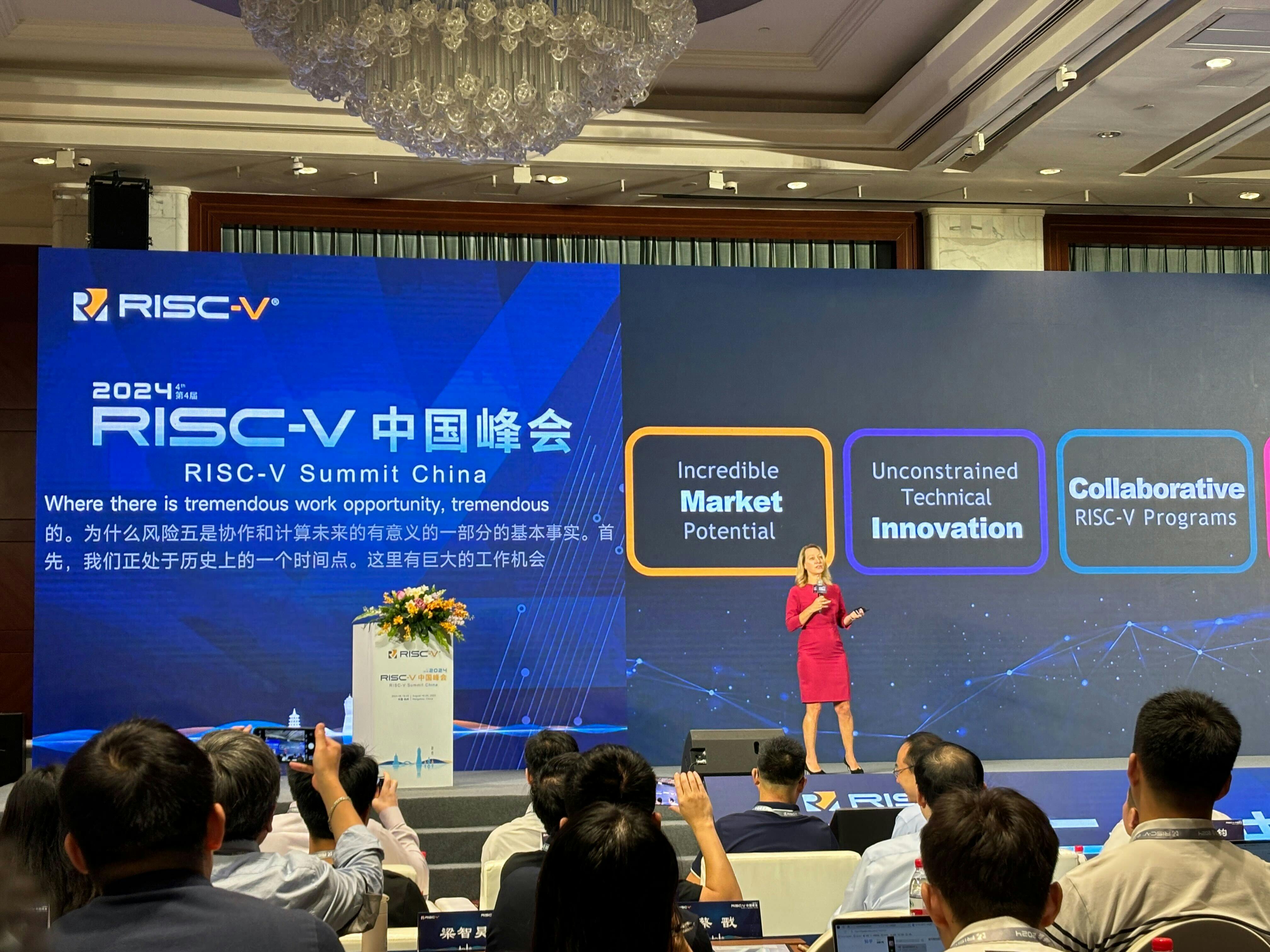
Making RISC-V a truly viable option for other, higher value applications is going to require the community to fully embrace and communicate the value proposition of RISC-V in key ways;
It’s rigidity; “Profiles” (a set of instructions) that must be incorporated into an SoC in order to run specifical rich operating systems and associated system level software pieces.
It’s flexibility; Enabling innovation since there is a need to deliver significantly better capabilities in order to convince customers of the merits of changing.
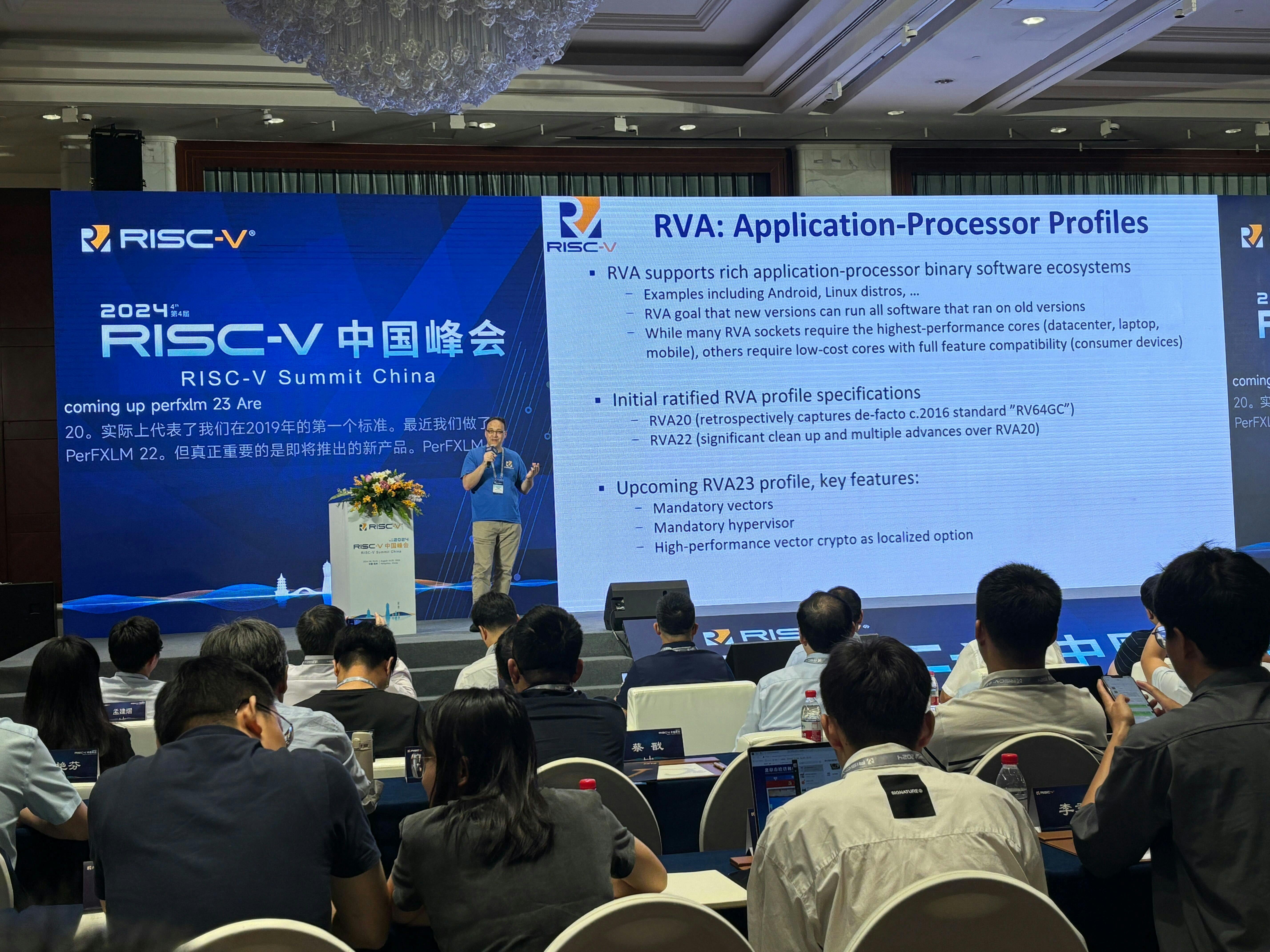
To that end Krste Asanovic, the Chief Architect behind RISC-V, gave an update on the RVA23 profile which is in the process of being ratified.
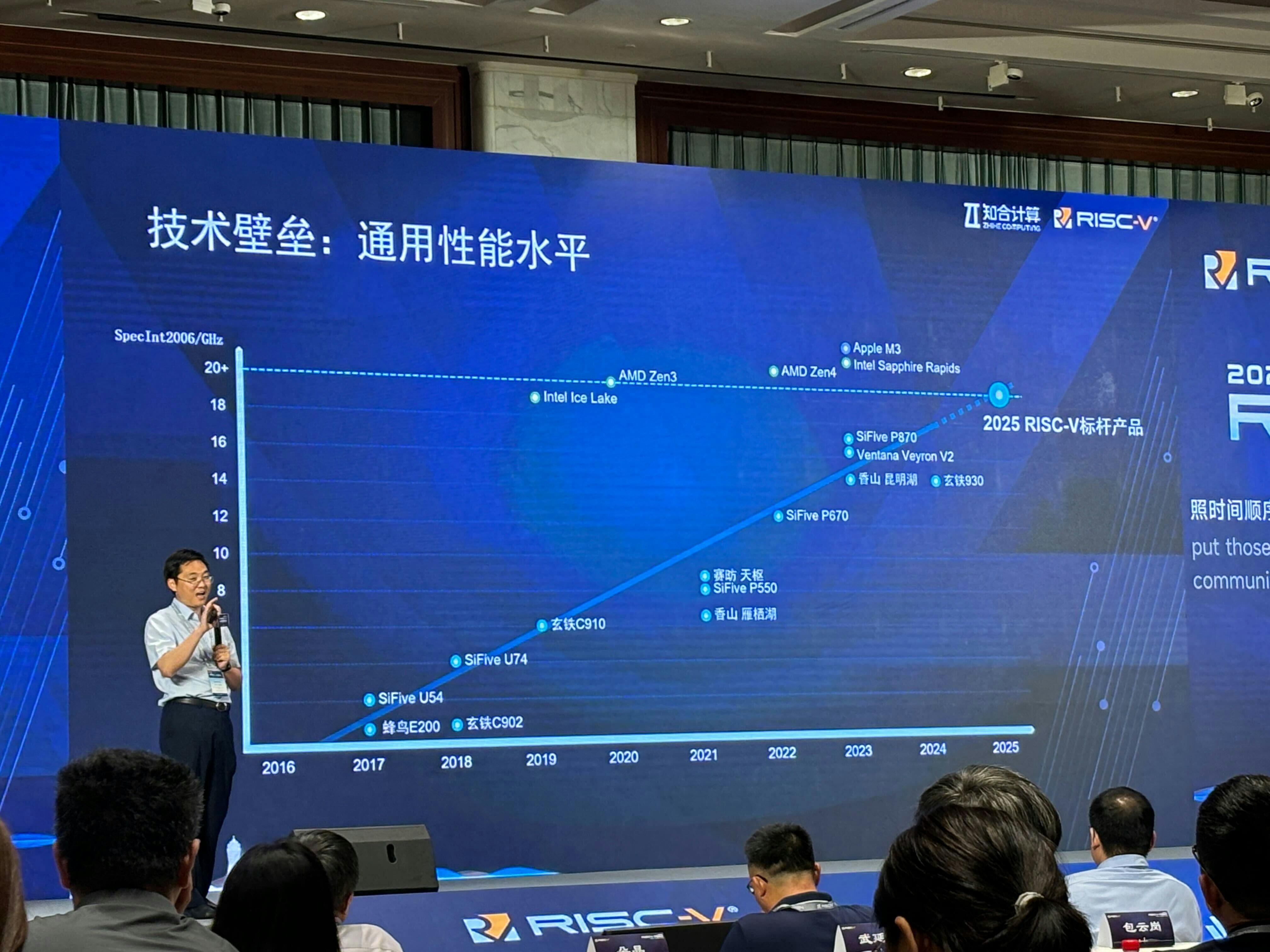
It was pleasing to see SiFive’s Performance P870-D processor recognized by an independent researcher as being the performance leader for RISC-V technology that is focused on the datacenter segment. It is clear that a number of other companies are focused on driving into that segment. SiFive clearly has to continue to work closely with customers and execute on our roadmaps in the Performance Processor Line to remain a leader.
The other widely held rhetoric at the event was that just like x86 became the architecture for computers and Arm became the standard for smartphones, that with its flexibility and scalability RISC-V will become the defacto standard for Artificial Intelligence.
To conclude, while significant progress has been made in driving adoption of RISC-V into a diverse set of applications, the community isn’t resting on its laurels. There is significant work needed to broaden RISC-V’s reach into new markets. That is going to take collaboration, patience and a whole lot of innovation to disrupt the incumbents but the excitement and enthusiasm at this event gave me a lot of confidence that RISC-V is headed nowhere but up. Our event focus now turns to the event in Santa Clara in October. We are excited to meet customers, prospects and partners there. For information about the event and registration details, click here.

Ian Ferguson
Ian Ferguson is the Vice President of Vertical Markets and Business Development at SiFive, where he is responsible for accelerating growth of the company across a range of growth segments including datacenter, consumer and automotive market segments. Of particular focus is how artificial intelligence offers an opportunity for industries to shift from incumbent architectures to the RISC-V open standard.
Prior to joining SiFive Ian worked at Lynx Software Technologies as the vice president of marketing at Lynx Software Technologies, responsible for all aspects of the outward-facing presence of the company to its customer, partner, press and analyst communities. Ian was a key part of the team that was responsible for selling the company to OceanSound Partners, a private equity firm. Ian also spent nearly 11 years at Arm, where he held various roles leading teams in vertical marketing, corporate marketing and strategic alliances. Ian is a graduate of Loughborough University (UK) with a bachelor’s degree in electrical and electrical engineering.


Read more Insights from the RISC-V Experts

SiFive 视角:RISC-V SPMP 规范正式批准,助力嵌入式安全飞跃发展

为您介绍 SKL:SiFive 算子库
