


SiFive 博客
来自 RISC-V 专家的最新洞察与深度技术解析

SiFive’s Shubu Mukherjee Recognized Along with Fellow Authors with SIGGMICRO’s Test of Time Award
In the fast moving Semiconductor Industry, predictions and papers become obsolete fast and so it’s worth recognizing when a paper has a significant impact on our industry that also has a bit of a timeless nature. The paper, A systematic methodology to compute the architectural vulnerability factors for a high-performance microprocessor (you can read it here) was recognized during the award ceremony at MICRO 22 in Chicago October 4th, and we’re proud to share that our very own VP of Architecture, Shubu Mukherjee, (who was at Intel at the time it was written) was there to accept the award on behalf of his fellow authors, Christopher Weaver, Joel Emer, Steve Reinhardt and Todd Austin.
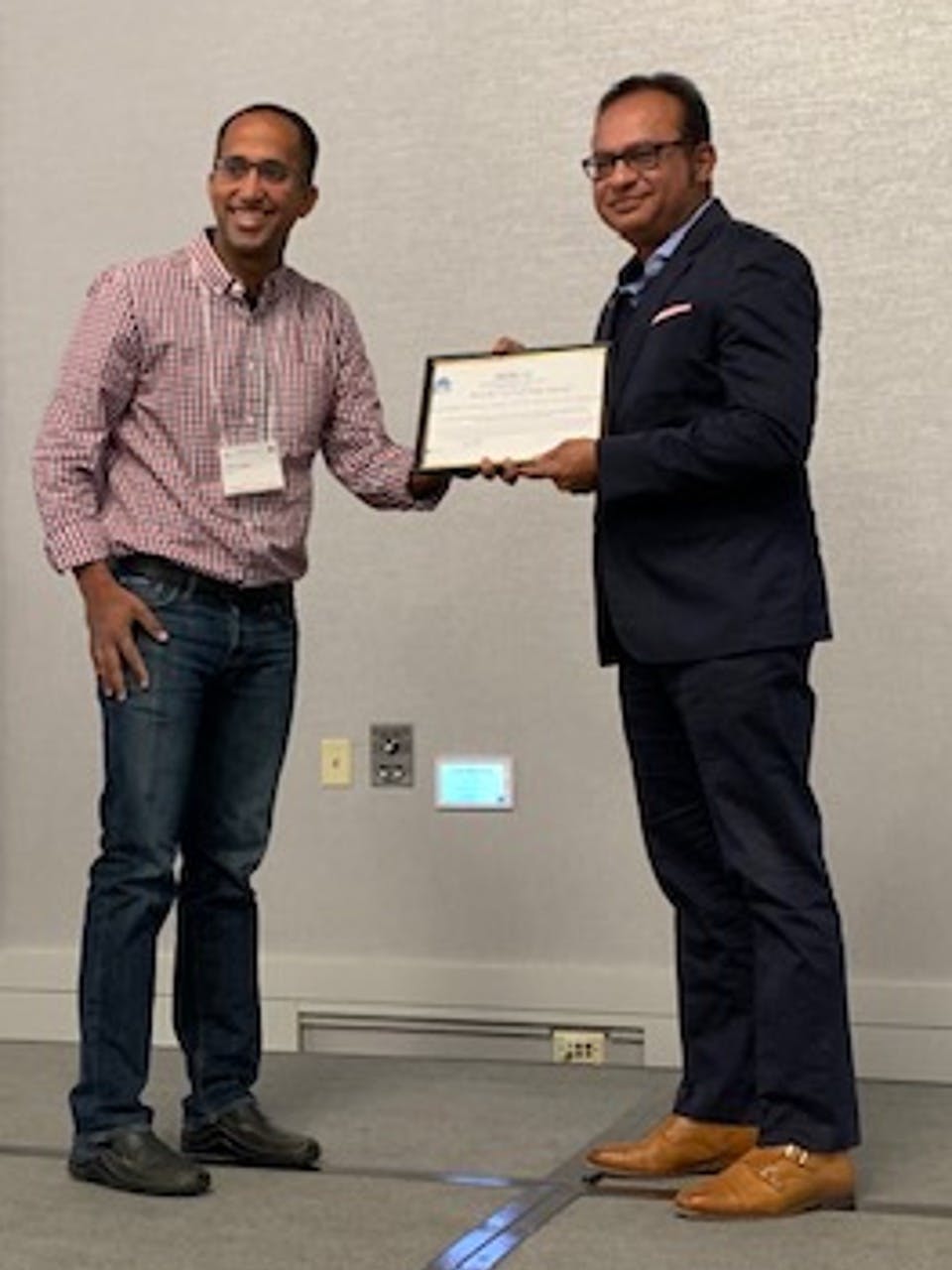
The methodology highlighted in the paper has been the foundation for RAS work done by a number of companies over the past 20 years and continues to be used in the FuSa work happening at SiFive and many other companies. The citation for the award reads: This paper targets the problem of assessing the cost and reliability trade-offs in a microprocessor. The authors introduce the concept of Architectural Vulnerability Factor (AVF) which estimates the probability that a fault in a particular hardware structure will result in a user-visible error. This concept was introduced at a time when continued technology scaling caused the architecture community to stumble upon the "Reliability Wall" and there was significant industry concern about the reliability of computing at scale due to transient faults. Both industry and academia invested significant efforts to ensure reliable program execution in the presence of such faults. The AVF analysis methodology allowed processor architects to reason about the impact of transient faults early enough in the design cycle to be able to prioritize protection decisions. The paper has had a significant impact on the technical community. At the time of this writing, it has had over 1200 citations on Google Scholar and has received over 40 citations each year for the past 15 years. AVF analysis is now an industry best practice.
At SiFive, Shubu has been instrumental in driving new technologies and his past FuSa work is helping shape our new Automotive Portfolio.
Congratulations to Shubu and the other authors. SiFive continues to attract some of the industry’s best technologists, and we’re proud to showcase their work. To see our latest opportunities, please see our careers page.


Read more Insights from the RISC-V Experts

SiFive 视角:RISC-V SPMP 规范正式批准,助力嵌入式安全飞跃发展

为您介绍 SKL:SiFive 算子库
